 Illustrative image
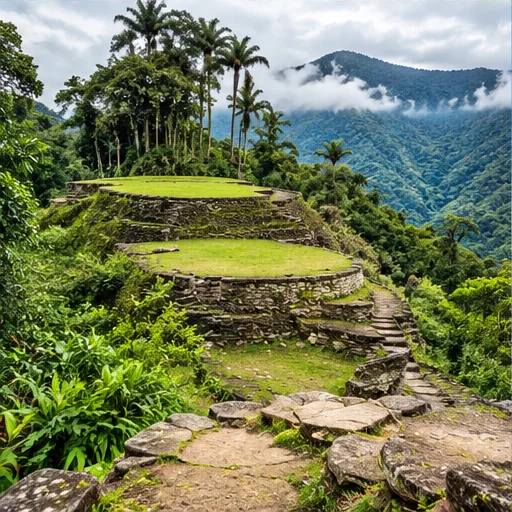
The Lost City, known as Teyuna or Ciudad Perdida, is not a casual archaeological stop. Reaching its stone terraces involves a multi-day guided hike through the Sierra Nevada de Santa Marta, often in hot, humid conditions, across muddy trails and river crossings. The route itself is as meaningful as the arrival: it passes through landscapes with profound importance to Indigenous communities. Planning well means choosing a responsible authorized operator, understanding the physical demands and listening carefully to the guidance of the communities connected to the site.
Why the guide requirement matters
Colombia's Instituto Colombiano de Antropología e Historia (ICANH) explains that visitors must travel to Teyuna-Ciudad Perdida with a guide and reserve in advance through an authorized operator. The path is not a clearly marked independent hiking route. This is not a place to improvise a self-guided visit or follow unofficial directions from a travel forum. Before booking, review the current guidance on the official ICANH site and ask the operator to explain its authorization, route and safety procedures.
Unlike a city attraction where you can decide to leave after an hour, a multi-day trek commits you to the full outbound and return journey. Good operators set expectations about terrain, meals, sleeping arrangements, local rules and medical limitations. If your dates are fixed, inquire early, but don't make a nonrefundable travel decision until the operator confirms the departure and your suitability for the route.
What a four-day itinerary generally involves
Most itineraries start and finish in the Santa Marta area, with ground transport to a trailhead and days of hiking between camps. Exact distances, elevations and schedules vary. The approach includes jungle paths, steep climbs, river sections and an ascent to the archaeological terraces; return stages can be lengthy. Wet weather can make walking much harder than a distance figure suggests.
Accommodation is generally simple camp-style lodging rather than hotels. Depending on the route and operator, you may find shared sleeping areas, mosquito protection, basic washing facilities and meals provided along the way. Confirm where you'll sleep, how drinking water is handled, what your luggage allocation is and whether bedding is included. A four-day tour should be judged by what each day demands, not a photo of the final terraces alone.
Fitness: be more realistic than optimistic
You do not need to be an elite athlete, but several consecutive days of hiking in heat and humidity are different from a single half-day walk. Prior experience with sustained uphill and downhill walking helps, and good footwear matters. Someone with a medical condition, mobility limitation or recent injury should ask a qualified clinician and the operator whether the trek is appropriate; an online listing cannot assess your individual risk.
Break in your shoes before the trip and carry only the essentials your operator recommends. Pack light, quick-drying layers, rain protection, insect protection, a reusable water bottle and any personal medication. Avoid assuming you can recharge devices or keep them dry at every stop. Ask about porter services if you need help with weight, but do not assume that a luggage transfer is included in every itinerary.
Responsible travel in Indigenous territory
The Sierra Nevada has deep cultural and spiritual significance to Indigenous peoples. Enter with an attitude of respect rather than treating it as an empty adventure playground. Follow guidance about photography, sacred places and appropriate interactions. Do not photograph individuals or ceremonies without permission, and do not make purchasing souvenirs or entering a community part of your expectations unless it is explicitly and appropriately arranged.
If the operator discusses community contributions, ask how arrangements are made and who leads interpretation. Indigenous guides and local staff should be treated as professionals, not as props in a travel narrative. A responsible trek prioritizes safety, dignity and the long-term stewardship of the route as much as the final destination.
Weather, closures and contingency days
Heavy rain can affect paths and river conditions; seasonal differences are real, but weather is never guaranteed. Routes and access conditions can change in response to environmental, public safety or community decisions. Check current advisories and closures shortly before departure, including updates from ICANH and your operator. A sensible itinerary has a buffer after the trek rather than an international flight immediately following a long return drive.
If you have only a few days in Santa Marta, distinguish between a beach-and-city stay and the time a Lost City trek requires. You will spend most of your visit on the trail. Some travelers prefer an extra rest day after the trek, while others continue to the Caribbean coast. Avoid layering an ambitious second adventure onto an already strenuous schedule.
Compare total value, not only the headline price
Ask for the complete cost and a list of inclusions: ground transfers, guide, park or entry charges, camp lodging, meals, drinking water, emergency provisions, and any extra fee for solo travelers. Confirm language, maximum group size, luggage advice, cancellation terms and what happens if conditions force a route change. ICANH notes that operator prices can vary depending on the services provided, so a headline rate alone does not establish a fair comparison.
Use the booking link to review the current named operator and live terms. For a private group, we can record your preferred dates, fitness expectations and party size, but guided access and authorization remain essential; submitting the private enquiry below does not itself book a trek.
Compare this experience on GetYourGuide
Review the current operator, tour details, departure dates, what's included and cancellation rules before booking. We do not run this tour.
View selected tour & live availability ↗Compare other nearby experiences ↗Affiliate disclosure: We may receive a commission if you book through these links, at no additional cost to you.Request a private tour
Tell us what would make the trip work for your group. We’ll review the enquiry and follow up about possible options; submitting does not confirm availability or a booking.
Common questions
Can you hike Ciudad Perdida without a guide?
No. ICANH states that visitors must be accompanied by a guide and arrange travel with an authorized operator in advance.
Is the four-day trek suitable for everyone?
No. It involves sustained hiking, often in heat, humidity and mud. Discuss health or mobility concerns with your clinician and the operator.
Does the tour include private rooms?
Do not assume so. Multi-day treks typically use basic camp-style accommodation. Read the specific operator’s lodging details.